
High Pressure Floating Ball Valve
A High Pressure Floating Ball Valve is an essential component in modern industrial fluid control systems, designed to provide reliable shut-off and regulation under demanding operating conditions. Its unique design features a ball that is free to float slightly within the valve body, utilizing system pressure to create a tight seal against the downstream seat. This makes it an exceptionally robust and cost-effective solution for managing high-pressure flows of liquids and gases. Industries such as oil and gas, chemical processing, power generation, and petrochemicals rely heavily on these valves for their critical operations due to their dependable sealing, ease of operation, and long service life. For applications requiring specific material properties, variations like the Carbon Steel Floating Ball Valve offer excellent strength and durability for general service, while the Stainless Steel Floating Ball Valve provides superior corrosion resistance for aggressive media. When a secure, leak-proof connection to piping is paramount, the Flanged Floating Ball Valve is the preferred choice, ensuring a robust and stable interface.
The engineering behind a High Pressure Floating Ball Valve focuses on maximizing performance and safety. The core principle involves the floating ball being pressed against the seat by the fluid pressure itself, which enhances the sealing force proportional to the line pressure. This self-energizing feature is key to its high-pressure capability. Manufacturers construct these valves from forged or cast materials to withstand extreme stress, incorporating reinforced stems, anti-blowout stem designs, and advanced seat materials like reinforced PTFE (RPTFE), PEEK, or metal for fire-safe versions. A High Pressure Floating Ball Valve typically features a reduced port (standard port) design, which minimizes the operating torque and seat wear while maintaining a strong seal. It is commonly operated via a wrench, gearbox, or pneumatic/hydraulic actuator for remote control. The design prioritizes minimal maintenance, with many models offering a top-entry configuration for easy in-line inspection and repair without removing the valve body from the pipeline, significantly reducing downtime and lifecycle costs.
Technical Specifications & Features
Our High Pressure Floating Ball Valves are engineered to meet the most stringent international standards. Below are the detailed parameters and construction features.
Key Design & Performance Parameters
- Pressure Rating: ANSI Class 600, 900, 1500; PN 100, 160, 250, 320
- Size Range: 1/2" to 12" (DN15 to DN300)
- Temperature Range: -29°C to 200°C (-20°F to 392°F) with standard seats; extended ranges available with special seats.
- Operation: Lever, Gear Operated, Pneumatic Actuator, Hydraulic Actuator, Electric Actuator.
- Leakage Class: Seat sealing conforms to API 598/6D & ANSI FCI 70-2, Class IV, V, or VI.
- Fire Safe Design: Compliant with API 607, API 6FA, and BS 6755 standards.
- Blow-Out Proof Stem: Standard feature ensuring safety in high-pressure applications.
- Anti-Static Device: Integrated to prevent static electricity buildup.
Material Specifications Table
| Component | Standard Material Option A | Standard Material Option B | Special Service Material |
|---|---|---|---|
| Valve Body & Bonnet | A105 (Carbon Steel) | SS304 / SS316 (Stainless Steel) | Duplex Steel, Alloy 20, Monel |
| Ball | SS304 with Chrome Plating | SS316 | Hardened SS316, Stellite Coated |
| Stem | SS304 / SS316 | 17-4PH (Precipitation Hardening) | Monel, Inconel |
| Seat Seals | Reinforced PTFE (RPTFE) | PEEK (Polyether Ether Ketone) | Metal (Stainless Steel, Inconel) for Fire-Safe |
| Gaskets & Packing | Graphite | PTFE | Grafoil® |
Standards & Certifications
- Design & Manufacture: API 6D, ASME B16.34, ISO 17292.
- Face-to-Face: API 6D, ASME B16.10.
- Flange Dimensions: ASME B16.5, ASME B16.47, EN 1092-1.
- Testing: API 598, ISO 5208.
- Fire Testing: API 607/6FA.
Related Products



Hot Products

Single Girder Bridge Crane
FYL is a hydraulic machinery manufacturer from China. Single girder bridge crane is one of our many high-quality products. We are well aware of the importance of product quality. We have complete factory certificates and can provide quality assurance at all levels. At the same time, we also provide related services and can design and produce according to customer needs.
Large Size Resilient Seat Gate Valve
Tianjin Fuyaolai Technology Co., Ltd. (FYL) is a premier manufacturer specializing in the Large Size Resilient Seat Gate Valve , offering a comprehensive range of styles and standards (DIN, ANSI, BS, JIS). Our valves are engineered using high-strength ductile iron and advanced vulcanization technology to ensure a 100% leak-proof seal and an extended service life.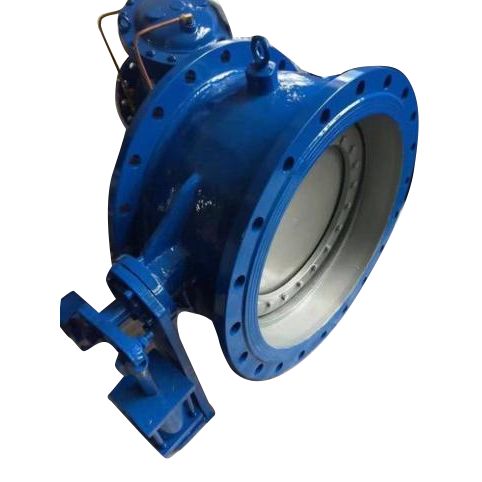
Tilting Type Check Valve
FYL's tilting type check valve is a high-quality product with a compact overall design, which is very convenient to install and use. We have rich experience in the design and manufacture of hydraulic machinery and equipment. Professionals will also conduct strict tests on the sealing of the products to ensure that the valve is leak-free.
Compound Air Release Valve
FYL is a factory located in Tianjin, China, producing compound air release valves with good performance and long service life. Product quality has always been the focus of our business. While keeping up with the development of the industry, we also hope to open up a wider market, improve our strength in all aspects, and better connect with the world.
Single Ball Flexible Rubber Joint
FYL's single ball flexible rubber joint adopts advanced foreign production technology. During the manufacturing process, the inner layer is subjected to high pressure to promote the bonding between the nylon cord and the rubber layer. Therefore, compared with ordinary flexible rubber joints, single ball flexible rubber joints can withstand higher working pressure and have a higher usability.
Bellows Compensator or Expansion Joint
FYL's Bellows Compensator or Expansion Joint is manufactured in China and are designed to provide comprehensive solutions for thermal expansion, vibration, and displacement compensation within industrial piping systems. Utilizing high-grade stainless steel and corrosion-resistant alloys, these components demonstrate superior capabilities in absorbing axial, lateral, and angular displacements, while simultaneously reducing pipeline vibration and noise.
- Related Blog
- Reviews