

How Can a Gantry Crane Transform Your Material Handling?
Article Summary
A gantry crane is a pivotal piece of industrial lifting equipment that offers unmatched flexibility, load capacity, and operational efficiency in material handling environments. This comprehensive article explains what a gantry crane is, how it works, how to choose the right model, and how businesses can solve common challenges such as production bottlenecks, safety risks, and high operating costs. By understanding gantry crane functions, configurations, and best practices, manufacturers, logistics professionals, and operations managers can make informed decisions that improve workflow, reduce downtime, and enhance workplace safety.
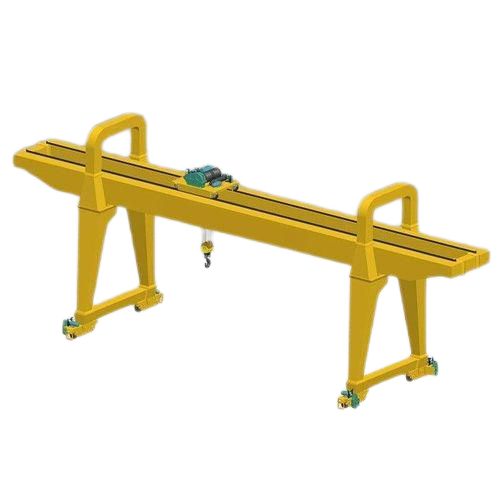
Table of Contents
- Gantry Crane Overview
- Common Customer Pain Points
- Key Components and Working Principles
- Types of Gantry Cranes
- How to Choose the Right Gantry Crane
- Operational Benefits
- Best Practices for Implementation
- Gantry Crane Comparison Table
- Frequently Asked Questions
- Conclusion and Contact Us
Gantry Crane Overview
A gantry crane is a lifting device that consists of a hoist fitted in a trolley, running horizontally on a rail or pair of rails fitted under a beam or framework. The entire structure stands on legs that move on wheels or along a track, enabling large load movement across a workspace without traditional overhead support. This configuration makes gantry cranes ideal for environments with limited infrastructure or where overhead travel paths are not feasible.
Gantry cranes are widely deployed in shipyards, construction sites, factories, warehouses, and outdoor storage areas due to their versatility, variable span widths, and ability to handle heavy loads with precision. Understanding the operational mechanics and applications of gantry cranes helps businesses optimize material flow, reduce manual labor, and improve safety.
Common Customer Pain Points
Despite their value, customers often face challenges when specifying and deploying gantry cranes. The most frequent pain points include:
- Incorrect load capacity estimation leading to underperformance or safety hazards
- Limited workspace compatibility due to fixed design choices
- High operating costs due to inefficient energy use or poor maintenance planning
- Downtime and delays due to improper installation or lack of operator training
- Safety risks from unstable lifting, improper anchoring, or poor environmental adaptation
Addressing these issues through informed selection and best practices ensures the gantry crane becomes an asset rather than a bottleneck in your operations.
Key Components and Working Principles
A gantry crane comprises several essential components that determine its performance, flexibility, and suitability for specific tasks. The primary elements are:
- Main Beam: The horizontal structure that supports the trolley and hoist system.
- Legs and Wheels/Tracks: Vertical supports that enable movement along a runway or floor surface.
- Hoist and Trolley: The lifting mechanism and carriage that travels along the beam.
- Control System: Manual or automated controls for safe and precise operation.
- Safety Devices: Limit switches, overload protection, emergency stops, and anti-sway systems.
When power is applied, the hoist lifts the load while the trolley moves it laterally across the beam. The entire crane can then travel longitudinally along tracks, offering three-axis movement for efficient load positioning.
Types of Gantry Cranes
Gantry cranes come in multiple configurations tailored to specific use cases. Recognizing these types helps businesses choose a solution that aligns with their operational layout and load requirements:
- Portable Gantry Cranes: Lightweight, movable units suitable for workshops or temporary lifting tasks.
- Single Girder Gantry Cranes: Best for small to medium loads with cost-effective performance.
- Double Girder Gantry Cranes: For heavier loads and long-span operations with enhanced stability.
- Adjustable Gantry Cranes: Feature variable heights and spans for flexible environments.
- Rubber-Tyred Gantry Cranes (RTGs): Mobile cranes used in container yards with large span and heavy load capacities.
How to Choose the Right Gantry Crane
Selecting an appropriate gantry crane involves a systematic evaluation process to match equipment specifications with operational needs:
- Define maximum and typical load weights.
- Assess workspace dimensions and travel path limitations.
- Determine duty cycle, speed requirements, and lifting frequency.
- Consider indoor vs. outdoor usage and environmental factors such as corrosion or weather.
- Evaluate control options: manual, pendant, remote, or automated systems.
- Ensure compliance with safety regulations and industry standards.
Partnering with a knowledgeable supplier like Tianjin Fuyaolai Technology Co., Ltd. helps in configuring cranes that meet structural, operational, and safety expectations with precision.
Operational Benefits
Implementing a well-suited gantry crane offers significant advantages that extend beyond simple lifting:
- Increased Efficiency: Faster material movement reduces cycle times and improves throughput.
- Improved Safety: Reduces manual handling and associated injury risks.
- Flexibility: Adjustable spans and mobile operation adapt to changing workloads.
- Cost Savings: Reduced labor, fewer delays, and optimized workflows lower total operating cost.
- Space Utilization: Enables vertical and horizontal load movement without obstructing floor operations.
Best Practices for Implementation
Proper implementation of a gantry crane is key to maximizing return on investment and minimizing risks. Below are essential practices:
- Conduct a detailed site survey before installation.
- Provide operator training on controls, safety devices, and emergency procedures.
- Establish a maintenance schedule for lubrication, wear checks, and safety inspections.
- Install proper lighting, signage, and floor markings to enhance visibility.
- Integrate load monitoring systems to prevent overloading and equipment stress.
These practices ensure longevity of equipment and continued operational safety.
Gantry Crane Comparison Table
| Crane Type | Load Capacity | Mobility | Ideal Use Case |
|---|---|---|---|
| Portable Gantry Crane | Up to 5 tons | High (on wheels) | Workshops, temporary lifting |
| Single Girder Gantry | 5–20 tons | Moderate | General manufacturing |
| Double Girder Gantry | 20–100+ tons | Moderate | Heavy fabrication, container handling |
| RTG Crane | 50–100+ tons | High (rubber-tyred mobility) | Container yards |
Frequently Asked Questions
What is the difference between a gantry crane and an overhead crane?
A gantry crane operates on legs that move on tracks or wheels and does not require a building structure, while an overhead crane runs on elevated beams fixed to the building.
Can a gantry crane be used outdoors?
Yes. Gantry cranes are well-suited for outdoor environments, especially models designed with weather-resistant coatings and structural reinforcement.
How often should gantry cranes be inspected?
Regular inspections should be conducted monthly or according to usage intensity, with detailed annual checks by certified technicians.
Is operator training necessary?
Yes. Proper training reduces safety risks and ensures the crane is operated within designed parameters.
Can gantry cranes be automated?
Yes. Advanced control systems allow for semi-automated or fully automated operation, increasing efficiency and consistency.
Conclusion and Contact Us
Gantry cranes are indispensable tools for modern material handling operations. By understanding their structure, variants, selection criteria, and implementation best practices, businesses can significantly enhance productivity, safety, and operational flexibility. Whether you are upgrading existing equipment or specifying new systems, the right gantry crane solution can unlock measurable performance improvements.
At Tianjin Fuyaolai Technology Co., Ltd., we specialize in delivering robust, customized gantry crane systems tailored to your industry’s load requirements and workflow demands. Contact us to discuss your project, receive professional guidance, and explore how our gantry cranes can elevate your material handling capability.
Previous:How Does a Diaphragm Valve Work?