

Bridge Crane (Overhead Crane) – Practical Operation & Maintenance Guide
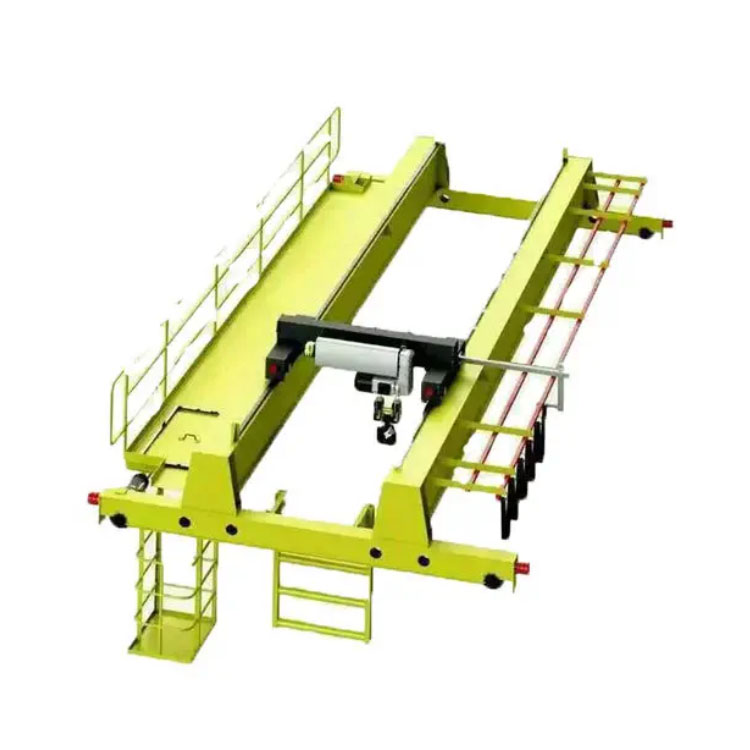
The bridge crane—commonly known as an overhead crane or "traveling crane"—is the most critical material-handling equipment in industrial workshops, spanning across workshop columns and handling heavy lifting duties on a daily basis. It combines high-altitude operational risks with high-frequency usage; any operational mistake or maintenance shortfall can easily lead to serious accidents such as falling loads, collisions, or electrical shocks.
Mandatory 3-Minute Pre-Shift Inspection (Life-Saving Step)
Do not power on immediately! 80% of mechanical failures show warning signs before startup. Perform a visual inspection first:
1. Runway Rails & End Trucks (Overhead Blind Spots)
-
Check the rail surface for oil stains, ice/frost, or loose bolts (especially critical in winter).
-
Inspect the bumper cushions (rubber or hydraulic) on the end trucks—these are your last line of defense against collision impact.
2. Wire Rope & Hook (The Most Critical Failure Points)
Wire rope: Visually count broken wires within one lay length (approx. 6× rope diameter)—if broken wires exceed 10%, or if you see "birdcaging" distortion or diameter reduction beyond 7%, report immediately for replacement.Hook: Check that the safety latch (anti-slip catch) springs back freely. Rotate the hook by hand—if it feels stuck or has excessive resistance, the thrust bearing is dry and requires immediate lubrication.
3. Hoist Limit Switch (Weight/Helical Type)
Critical test: Lift the empty hook upward until it triggers the limit switch—the power must cut off instantly. If you hear the contactor "chattering" but the motor keeps running, the limit switch is faulty. Do not operate until repaired.4. Remote Control / Cabin Emergency Stop
Press the emergency stop button—the entire crane must shut down. If any movement still responds, replace the remote batteries immediately or check the control circuit.
The "Golden Three Elements" of Crane Driving – Steady, Accurate, Fast
1. Hoisting Operation (Anti-Two-Blocking Rule)
-
Inching lift: When lifting a load, stop at 20–30 cm above the ground, then lift-stop-lift again. This is called a "brake test"—confirm that the brake holds the load without slipping.
-
Strictly prohibit "reverse braking": To slow down during hoisting, only move the controller back to a lower speed gear—never push directly into the lower/descent direction, as this will cause severe impact on the gearbox and may even snap the shaft.
2. Bridge & Trolley Travel (Eliminating Load Swing)
-
Anti-sway technique: When the bridge starts moving, the load swings backward; when stopping, it swings forward.
-
Rule of thumb: Accelerate gently (follow the swing), decelerate early (anticipate the stop).
-
Practical method: When approaching the target position, return the controller to neutral about 1 meter short of the stop point, allowing the crane to coast into position—at that moment, the load hangs vertically and positioning is most accurate.
-
Never use "reverse current braking" for emergency stops: Unless it is a true emergency, always allow the electrical braking to decelerate naturally. Abruptly throwing the controller to the opposite direction causes excessive lateral stress on the main girder, shortening its service life.
3. Special Conditions (Eccentric Loading & Side Pulling)
-
Absolute prohibition: Side pulling is strictly forbidden. This not only violates the "Ten No-Lifts" rule but also causes the trolley wheels to grind severely against the rail flange, leading to "rail gnawing" or even derailment.
-
Eccentric load handling: If the load's center of gravity is offset, you must reposition the hook directly above the center of gravity before lifting—otherwise, the wire rope on one side will bear disproportionate stress and is prone to snapping.
Emergency Troubleshooting for Common Failures (Operator-Level Response)
| Symptom | Possible Cause | Emergency Action (Operator Level – Not for Repair Technicians) |
|---|---|---|
| Hoist won't respond | Limit switch stuck, or cab door switch not engaged | Check that the cab door is fully closed; gently tap the weighted limit lever. If still unresponsive, do not bypass/jump the circuit—report immediately. |
| Load creeping down (slipping) | Brake wheel worn or hydraulic thruster failed | Emergency: Lower the load to the ground immediately. Never try to compensate by hoisting upward. Tag the crane "Out of Service" after landing. |
| Loud screeching noise during bridge travel | Wheel tread worn or rail clip bolts loose | Stop immediately. This can lead to rail breakage. Notify maintenance to check rail levelness and alignment. |
| Remote control signal loss | Battery low or frequency interference | Press the remote's "Emergency Stop" button to reset. If the red LED blinks, replace the battery. Never short-circuit the receiver terminals with metal objects. |
Scheduled Maintenance & Inspection Cycle (Must Be Posted in the Workshop)
Daily Inspection (Operator Responsibility): Limit switches, wire rope visual condition, hook safety latch, emergency stop button.
Weekly Inspection (Team Leader Responsibility): Brake clearance (normal range: 0.5–0.7 mm—if exceeding 1 mm, adjustment is required); gearbox oil level (visible at the center of the sight glass).
Monthly Inspection (Maintenance Electrician Responsibility): Conductor bar collector wear (carbon brush residual height <5 mm = must replace); main circuit terminal connections for discoloration/overheating (this is physical evidence of overload).
Annual Inspection (Mandatory by Regulatory Authority): Static load test (1.25× rated capacity), dynamic load test (1.1× rated capacity), and main girder deflection measurement (replacement required if exceeding specified limits).
Quick-Reference Hand Signals for Rigging Communication
-
Prepare / Stop: Arm extended horizontally, palm facing down, wave left and right.
-
Hoist up: Arm extended upward, index finger pointing to the sky, make small circles.
-
Hoist down: Arm extended downward, index finger pointing to the ground, make small circles.
-
Emergency stop: Both arms raised with hands clasped above the head (all motions must cease immediately).
Final Critical Warning: Power-Outage Rescue & "Secondary Electric Shock"
If a power failure leaves a load suspended mid-air:
-
Strictly prohibit operators from climbing onto the main girder to manually release the brake!
-
Correct procedure: Set up an exclusion zone → maintenance personnel use the manual hand-crank hoist device (if equipped) or hydraulic jacking to safely release the brake.
-
Escape rule: If the cab catches fire, do not jump. Drive the crane to the nearest emergency exit point and use the safety rope/descent device provided in the cab.
Final Word: An overhead crane is an "aerial freight handler." It is not afraid of heavy loads—it fears impact shock and metal fatigue. Smooth starts/stops and regular oil changes are far more effective than any high-tech anti-collision system. That second look and double-check before every load descent is the greatest respect you can pay to your own life.