

How Do Pressure Tests Ensure Wafer Butterfly Valve Reliability?
At FYL, we consider pressure testing an essential step in evaluating the reliability of industrial valves. For a Wafer Butterfly Valve With Worm Gear, pressure tests help verify whether the valve body can withstand the specified pressure and whether the sealing components can prevent leakage under test conditions. In this article, we explain how shell and seal tests work, examine the pressure ratings available in our butterfly valve range, and discuss what these results mean for water treatment, sewage systems, and industrial pipeline applications.
Table of Contents
- Why Are Pressure Tests Important for Wafer Butterfly Valves?
- What Are the Main Pressure Tests for Butterfly Valves?
- FYL Wafer Butterfly Valve Pressure Test Parameters
- How Do Pressure Tests Improve Valve Reliability?
- How Does the Worm Gear Design Affect Valve Operation?
- Where Are Pressure-Tested Butterfly Valves Used?
- What Should You Check When Selecting a Butterfly Valve?
- Frequently Asked Questions
Why Are Pressure Tests Important for Wafer Butterfly Valves?
A butterfly valve may operate smoothly during an initial inspection, but that alone does not confirm its ability to handle pressure in an actual pipeline. Internal defects, inadequate sealing contact, or unsuitable component materials may cause problems once the valve is installed and exposed to operating pressure.
Pressure testing provides a practical way to evaluate two important aspects of valve performance: the structural strength of the valve body and the sealing capability of the closed valve. These checks are particularly important for a Wafer Butterfly Valve With Worm Gear because it is commonly installed in systems where reliable isolation and controlled fluid flow are required.
At FYL, our butterfly valve product range includes shell test pressures of 1.5 MPa, 2.4 MPa, and 3.0 MPa, with corresponding seal test pressures of 1.1 MPa, 1.76 MPa, and 2.2 MPa. These values provide useful reference points when evaluating product specifications for different pipeline requirements.
However, passing a pressure test does not automatically mean that a valve is suitable for every operating condition. Actual selection must also consider working pressure, medium temperature, fluid characteristics, seat material, and pipeline configuration.
What Are the Main Pressure Tests for Butterfly Valves?
For industrial butterfly valves, shell testing and sealing testing evaluate different performance requirements. Understanding the distinction helps engineers interpret test results rather than treating pressure resistance as a single specification.
1. Shell Pressure Test
The shell test evaluates the pressure-bearing capacity of the valve body. During this test, the valve body is subjected to a specified test pressure to check for visible leakage, structural damage, or other signs of failure.
For wafer butterfly valves, the body structure must withstand pressure without compromising the valve's mechanical integrity. This is important because the valve is installed between pipeline flanges and secured with connecting bolts.
A satisfactory shell test result provides evidence that the pressure-containing body meets the specified test conditions. It does not, by itself, verify the sealing performance of the closed disc.
2. Seat Sealing Pressure Test
The seal test focuses on the contact between the butterfly disc and the valve seat when the valve is closed. Its purpose is to evaluate whether the sealing structure can restrict leakage under the specified test pressure.
The seat material plays an important role in this process. Depending on the product configuration, butterfly valve seats may use EPDM, PTFE, or other rubber materials. Each option has different compatibility characteristics with water, sewage, chemicals, and temperature conditions.
For example, EPDM is commonly considered for water-related applications, while PTFE may be selected for certain chemical service requirements. The final choice should always be based on the actual medium and operating conditions.
Shell Test vs. Seal Test
| Test Type | Main Inspection Focus | What It Helps Verify |
|---|---|---|
| Shell Pressure Test | Valve body and pressure-containing structure | Structural integrity under specified test pressure |
| Seal Pressure Test | Disc and seat sealing interface | Leakage control when the valve is closed |
| Operational Inspection | Disc rotation and worm gear mechanism | Smooth manual opening and closing |
FYL Wafer Butterfly Valve Pressure Test Parameters
When evaluating a Wafer Butterfly Valve With Worm Gear, we recommend checking the shell and seal test values together. A difference between these two values is expected because they represent different inspection objectives.
The following table presents the pressure parameters listed in our product specifications.
| Parameter | Available Values | Purpose |
|---|---|---|
| Shell Test Pressure | 1.5 MPa / 2.4 MPa / 3.0 MPa | Evaluates valve body pressure resistance |
| Seal Test Pressure | 1.1 MPa / 1.76 MPa / 2.2 MPa | Evaluates closed-valve sealing performance |
| Operation Types | Handwheel / Pneumatic / Electric / Worm Gear | Provides different valve actuation options |
| Applicable Media | Water / Sewage / Seawater / Air / Steam | Supports different industrial pipeline applications |
One practical point worth noting is that the shell test pressure should not be confused with the allowable working pressure. Test pressure is used for product inspection under defined conditions, while the permitted operating pressure depends on the valve's rated specifications and service requirements.
When specifying a valve for a project, we recommend confirming the required pressure class, test requirements, medium compatibility, and connection dimensions before production.
How Do Pressure Tests Improve Valve Reliability?
Pressure testing contributes to valve reliability in several practical ways. Rather than relying only on appearance or dimensional inspection, it provides additional evidence of how the valve performs under controlled pressure conditions.
Detecting Potential Body Defects
A shell pressure test helps identify problems such as leakage through the valve body or other visible signs of structural weakness. Detecting these issues before installation can reduce the risk of pipeline maintenance and unexpected shutdowns.
Checking Sealing Performance
The sealing test evaluates the interaction between the disc and seat. If the sealing interface cannot maintain the required performance, fluid may continue passing through a closed valve. This can be particularly problematic in water distribution networks and wastewater isolation systems.
Supporting Consistent Product Inspection
Using defined pressure test values provides a measurable reference for product inspection. It also makes it easier to compare different valve specifications and confirm whether the selected model meets the project's stated requirements.
At FYL, we view pressure testing as one part of a broader product quality evaluation. Correct material selection, dimensional accuracy, assembly quality, and operating mechanism performance are also important to long-term valve service.
How Does the Worm Gear Design Affect Valve Operation?
Pressure resistance and sealing performance are only part of butterfly valve reliability. The operating mechanism also affects how consistently the valve can be opened and closed during daily service.
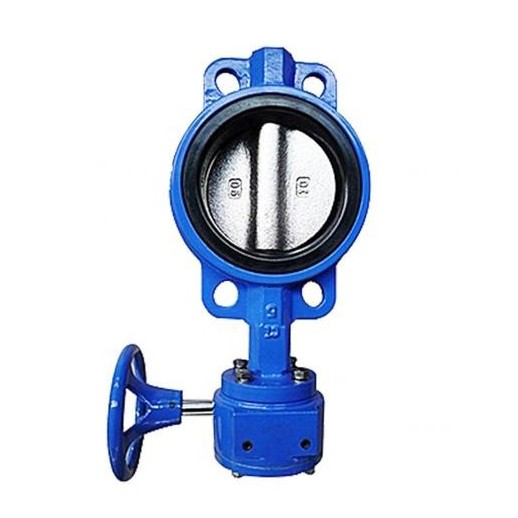
A Wafer Butterfly Valve With Worm Gear uses a worm gear mechanism to transmit manual input to the valve stem. The gear reduction lowers the operating effort required compared with direct manual operation, particularly for larger valve sizes.
The butterfly disc rotates approximately 90 degrees between the fully open and fully closed positions. This quarter-turn structure allows relatively quick operation and makes the valve suitable for pipeline isolation and certain flow-regulation applications.
Key Structural Features
- Wafer-style body: The compact body is installed between two pipeline flanges and secured with connecting bolts.
- Worm gear actuator: Provides mechanical reduction for easier manual operation and controlled disc movement.
- Butterfly disc: Commonly available in stainless steel or other specified materials depending on the product configuration.
- Elastomer seat: EPDM, PTFE, or rubber seat options help achieve the required sealing performance.
- Quarter-turn operation: A 90-degree rotation provides a straightforward opening and closing mechanism.
For larger pipeline installations, the worm gear mechanism can make manual operation more manageable. However, correct actuator sizing is still important. Operating torque, differential pressure, seat friction, and valve size should be considered when selecting the operating mechanism.
Where Are Pressure-Tested Butterfly Valves Used?
The combination of a compact wafer body, quarter-turn operation, and worm gear control makes this valve configuration suitable for various industrial pipeline systems. The appropriate valve materials and seat configuration should be selected according to the specific service conditions.
Water Supply and Treatment Systems
In water treatment facilities, butterfly valves are used to isolate pipeline sections and regulate water flow. Shell and seal pressure testing helps evaluate the valve body and closed-valve sealing performance before installation.
Sewage Treatment Plants
Wastewater pipelines often require valves that can handle frequent operation and varying fluid conditions. For these applications, the valve seat and body materials should be selected according to the wastewater composition and operating environment.
HVAC and Industrial Circulation Systems
Butterfly valves are widely used in cooling water and circulation pipelines. Their compact structure helps reduce installation space, while the worm gear actuator provides practical manual control.
Oil, Gas, and Chemical Industries
In industrial process pipelines, pressure requirements and fluid compatibility are important selection considerations. The valve body, disc, and seat materials must be suitable for the actual medium, temperature, and pressure conditions.
Power Generation and General Industrial Applications
Butterfly valves can also be installed in utility water, cooling, and other supporting pipeline systems in power plants and manufacturing facilities. The required pressure rating and sealing configuration should be confirmed for each service point.
What Should You Check When Selecting a Butterfly Valve?
In our experience, selecting a butterfly valve based only on nominal diameter or pressure rating can lead to mismatches during installation. We recommend reviewing several technical details before confirming a product specification.
| Selection Factor | What to Confirm | Why It Matters |
|---|---|---|
| Nominal Diameter | DN size and pipeline flange dimensions | Ensures installation compatibility |
| Working Pressure | Required operating pressure and pressure class | Prevents pressure rating mismatches |
| Test Pressure | Required shell and seat test values | Confirms inspection requirements |
| Body and Disc Material | Ductile iron, stainless steel, or other suitable alloys | Matches mechanical and environmental requirements |
| Seat Material | EPDM, PTFE, or rubber options | Ensures medium and temperature compatibility |
| Operating Method | Worm gear, handwheel, pneumatic, or electric | Matches operating frequency and control requirements |
Our product specifications list a typical size range from 2 inches (50 mm) to 48 inches (1200 mm) or larger, while the dimensional table for this worm gear model provides DN150 to DN700 data. For a specific project, we recommend confirming the exact available size and flange dimensions with our technical team.
For reference, the dimensional data below shows selected values from our worm gear butterfly valve specification:
| Nominal Diameter (DN) | Face-to-Face Length L (mm) | Dimension D1 (mm) | Dimension H1 (mm) |
|---|---|---|---|
| 150 | 56 | 240 | 140 |
| 200 | 60 | 295 | 175 |
| 250 | 68 | 350 | 206 |
| 300 | 78 | 400 | 242 |
| 400 | 102 | 515 | 308 |
| 500 | 127 | 620 | 350 |
| 600 | 154 | 725 | 410 |
| 700 | 168 | 840 | 480 |
Frequently Asked Questions
1. What is the difference between a shell test and a seal test?
A shell test evaluates the structural integrity of the valve body under specified pressure conditions. A seal test checks the leakage performance of the closed valve, focusing on the contact between the disc and seat.
2. What are the shell and seal test pressures of FYL butterfly valves?
Our product specifications list shell test pressures of 1.5 MPa, 2.4 MPa, and 3.0 MPa. The corresponding seal test pressure values are 1.1 MPa, 1.76 MPa, and 2.2 MPa. The applicable values should be confirmed for the selected valve configuration.
3. Why choose a wafer butterfly valve with worm gear operation?
The wafer body has a compact structure and is installed between pipeline flanges. The worm gear mechanism reduces manual operating effort and provides controlled quarter-turn operation. This configuration is particularly useful for larger valves and applications requiring manual isolation.
4. Which seat materials are available for wafer butterfly valves?
Common seat material options include EPDM, PTFE, and rubber. The appropriate material depends on the fluid medium, operating temperature, pressure conditions, and chemical compatibility.
5. What media can a Wafer Butterfly Valve With Worm Gear handle?
The applicable media listed in our product specifications include water, sewage, seawater, air, and steam. However, not every material and seat combination is suitable for all these media. The final configuration should be confirmed according to actual operating conditions.
6. Does passing a pressure test guarantee long-term valve performance?
No. Pressure testing verifies performance under defined inspection conditions, but long-term service life also depends on material compatibility, installation quality, operating frequency, fluid characteristics, and maintenance practices.
Conclusion
Pressure testing is an important part of evaluating wafer butterfly valve quality. Shell tests help verify the strength of the valve body, while sealing tests provide evidence of the disc and seat's ability to control leakage under specified conditions. Both are essential considerations when selecting valves for industrial pipelines.
At FYL (Tianjin Fuyaolai Technology Co., Ltd.), we focus on the design, manufacturing, and supply of industrial valves, penstocks, mechanical bar screens, pipe fittings, and cranes. Our product range covers more than 50 series and 600 products, with OEM design services available for specific customer requirements.
If you are evaluating a Wafer Butterfly Valve With Worm Gear for a water treatment plant, sewage pipeline, or industrial project, we welcome you to discuss the required pressure ratings, valve dimensions, material options, and operating configuration with our team. Providing the actual pipeline conditions helps us identify a more suitable valve specification for your application.