

How Is Bridge Crane Adoption Shaping Industrial Material Handling?
Abstract
Bridge cranes are a core component of modern industrial material handling systems, widely deployed in manufacturing plants, warehouses, power facilities, steel mills, and logistics centers. This article provides a comprehensive analysis of bridge crane systems, focusing on structural configuration, operating principles, load parameters, control methods, and compliance considerations.
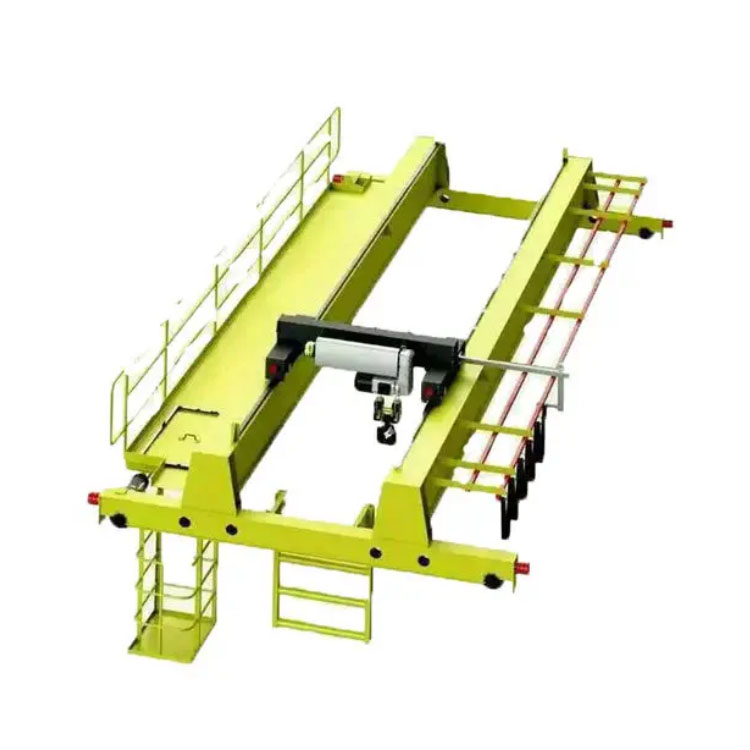
Table of Contents
- 1. How Do Bridge Cranes Function Within Industrial Facilities?
- 2. How Are Bridge Crane Technical Parameters Defined and Evaluated?
- 3. How Do Bridge Cranes Support Diverse Industrial Applications?
- 4. How Will Bridge Crane Systems Evolve With Industry Requirements?
- Bridge Crane Common Questions and Answers
- References
1. How Do Bridge Cranes Function Within Industrial Facilities?
A bridge crane, commonly referred to as an overhead crane, is a load-handling system designed to move heavy materials horizontally and vertically within a defined workspace. The system typically consists of parallel runways, a traveling bridge girder, a hoist trolley, and a lifting mechanism. By operating above the production floor, bridge cranes maximize usable space while enabling precise material positioning.
Bridge crane motion is generally defined along three axes: longitudinal travel along the runway, transverse travel across the bridge girder, and vertical lifting via the hoist. This configuration allows full coverage of rectangular work zones and supports repetitive or high-capacity lifting tasks. Power supply methods include conductor bars, festoon systems, or energy chains, depending on duty classification and facility layout.
In industrial environments, bridge cranes are integrated with structural building elements or dedicated support columns. Control options range from pendant control and radio remote systems to advanced cabin operation and automated interfaces. These systems are engineered to align with production workflows, safety protocols, and equipment interoperability requirements.
2. How Are Bridge Crane Technical Parameters Defined and Evaluated?
Technical parameters form the foundation of bridge crane selection and engineering. These parameters ensure compatibility with load characteristics, operational frequency, environmental conditions, and regulatory standards. Proper specification minimizes downtime and supports consistent performance throughout the crane’s service life.
| Parameter | Typical Range | Description |
|---|---|---|
| Rated Lifting Capacity | 1–500 tons | Maximum load the crane is designed to lift under normal operating conditions |
| Span Length | 5–40 meters | Distance between runway rails determining horizontal coverage |
| Lifting Height | 6–30 meters | Vertical distance from floor level to hook’s highest position |
| Working Duty Class | A3–A8 | Classification based on load frequency and operational intensity |
| Control Mode | Pendant / Remote / Cabin | Method used by operators to control crane movements |
In addition to these core parameters, evaluation criteria also include structural deflection limits, motor protection grades, braking systems, and electrical redundancy. Compliance with international standards ensures consistency across global industrial applications.
3. How Do Bridge Cranes Support Diverse Industrial Applications?
Bridge cranes are deployed across a wide range of industries due to their adaptability and scalability. In manufacturing plants, they support assembly lines by transporting components between workstations. In steel and metallurgy sectors, high-capacity bridge cranes manage molten materials, slabs, and coils under elevated temperature conditions.
In logistics and warehousing environments, bridge cranes improve throughput by enabling rapid handling of oversized or heavy cargo. Power generation facilities rely on bridge cranes for turbine maintenance and equipment installation, where precision and reliability are essential.
Integration with digital monitoring systems has expanded application scope. Load sensors, condition monitoring modules, and programmable logic controllers allow bridge cranes to interface with broader plant management systems. This alignment enhances operational transparency and supports predictive maintenance strategies.
4. How Will Bridge Crane Systems Evolve With Industry Requirements?
Industrial transformation continues to influence bridge crane system development. Automation, energy efficiency, and modular design concepts are increasingly incorporated into crane engineering. Smart control architectures enable semi-automated lifting sequences, reducing operator workload and improving repeatability.
Material innovations, such as high-strength alloys and optimized girder profiles, contribute to reduced self-weight while maintaining structural integrity. Variable frequency drives and regenerative braking systems support energy optimization within high-duty applications.
As industrial facilities prioritize safety and compliance, bridge cranes are being designed with enhanced diagnostics, fail-safe mechanisms, and standardized interfaces. These developments align crane systems with evolving regulatory frameworks and operational expectations.
Bridge Crane Common Questions and Answers
How is a bridge crane different from a gantry crane?
A bridge crane operates on elevated runways attached to building structures, while a gantry crane is supported by legs running on ground-level rails. The selection depends on facility design and load handling requirements.
How is the duty class of a bridge crane determined?
Duty class is defined by load magnitude, lifting frequency, and operating hours. Higher duty classes indicate suitability for continuous or heavy-cycle operations.
How is safety ensured during bridge crane operation?
Safety is maintained through overload protection, limit switches, emergency braking systems, and operator training aligned with recognized industrial standards.
References
ISO 4301 Cranes — Classification
FEM Rules for the Design of Hoisting Appliances
CMAA Specification for Top Running Bridge and Gantry Cranes
OSHA Overhead and Gantry Crane Guidelines
As global industries continue to modernize material handling infrastructure, bridge crane systems remain a foundational solution for controlled and efficient lifting operations. Tianjin Fuyaolai Technology Co., Ltd. provides bridge crane solutions engineered to align with industrial performance expectations and compliance requirements. For project consultation, technical documentation, or system configuration guidance, contact us to discuss specific operational needs and implementation objectives.
Previous:Eccentric butterfly valves