

How Is a Steel Penstock Gate Designed for Water Control Systems?
Abstract
How can a Steel Penstock Gate be effectively engineered to meet the stringent demands of modern water control, flood management, and hydraulic infrastructure projects? This article provides a comprehensive, technically oriented overview of Steel Penstock Gates, focusing on design principles, structural parameters, operational mechanisms, installation considerations, and long-term performance expectations. Written from an industry-facing perspective, the content emphasizes specification accuracy, engineering logic, and application suitability, aligning with the reading habits of professionals in water resources, municipal engineering, and industrial flow control sectors.
Outline
- Introduction to Steel Penstock Gate Systems
- How Does a Steel Penstock Gate Function in Hydraulic Applications?
- Key Engineering Parameters of Steel Penstock Gates
- How Are Steel Penstock Gates Specified for Different Environments?
- Installation, Operation, and Maintenance Considerations
- Common Questions About Steel Penstock Gates
- How Will Steel Penstock Gates Evolve in Future Infrastructure Projects?
- Conclusion and Industry Contact
Introduction to Steel Penstock Gate Systems
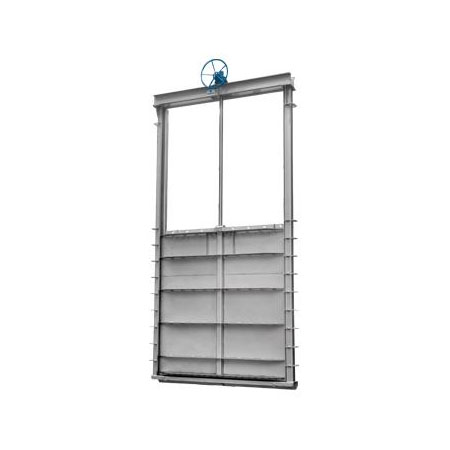
A Steel Penstock Gate is a fabricated hydraulic control device primarily used to regulate, isolate, or discharge water and other fluids in channels, pipelines, reservoirs, and treatment facilities. Typically manufactured from carbon steel or stainless steel, this type of gate is engineered to withstand high hydrostatic pressure, variable flow conditions, and long-term mechanical loading.
The core purpose of this article is to explain how Steel Penstock Gates are designed and applied in real-world projects, while clarifying critical parameters that engineers, procurement specialists, and system designers must evaluate during selection and deployment.
How Does a Steel Penstock Gate Function in Hydraulic Applications?
Steel Penstock Gates operate by vertically or horizontally moving a gate leaf within a rigid frame, thereby controlling fluid flow through an opening. The motion is achieved through manual, electric, hydraulic, or pneumatic actuators depending on operational requirements.
The gate structure transfers water pressure loads to the embedded civil structure, ensuring controlled isolation or regulation without compromising channel integrity. This functional simplicity, combined with high structural reliability, explains why Steel Penstock Gates are widely used in dams, irrigation canals, wastewater treatment plants, hydropower facilities, and industrial water systems.
Key Engineering Parameters of Steel Penstock Gates
Accurate specification is fundamental to ensuring reliable operation. The following table outlines typical technical parameters used to define Steel Penstock Gate performance in engineering documentation.
| Parameter | Typical Specification Range |
|---|---|
| Gate Size | 300 × 300 mm to 6000 × 6000 mm |
| Material Grade | Carbon Steel Q235/Q345 or Stainless Steel 304/316 |
| Design Water Head | Up to 30 meters |
| Sealing Type | EPDM / NBR Rubber Seals |
| Operation Mode | Manual, Electric, Hydraulic |
| Installation Type | Wall-mounted or Channel-mounted |
These parameters collectively determine structural safety margins, sealing performance, and compatibility with civil works.
How Are Steel Penstock Gates Specified for Different Environments?
Environmental conditions significantly influence gate specification. In wastewater treatment facilities, corrosion resistance and sealing reliability are prioritized. In hydropower applications, structural stiffness and fatigue resistance under fluctuating loads become critical.
Design engineers typically consider fluid characteristics, operating frequency, ambient temperature, and installation accessibility when defining gate configurations. Proper alignment between gate design and site-specific constraints ensures predictable operation throughout the service lifecycle.
Installation, Operation, and Maintenance Considerations
Correct installation is essential for maintaining sealing integrity and mechanical alignment. Steel Penstock Gates are commonly installed using embedded anchor bolts or cast-in frames to ensure load transfer to concrete structures.
Routine maintenance focuses on actuator lubrication, seal inspection, and corrosion protection. With appropriate surface treatment and periodic servicing, Steel Penstock Gates can achieve service lives exceeding several decades in controlled environments.
Common Questions About Steel Penstock Gates
How does a Steel Penstock Gate differ from a sluice gate?
A Steel Penstock Gate is generally designed for higher structural loads and precise isolation, whereas sluice gates are often used for flow regulation in open channels with lower pressure requirements.
How is sealing performance ensured under high water head conditions?
Sealing is achieved through precision-machined contact surfaces combined with resilient rubber seals that compress under water pressure, enhancing tightness as head pressure increases.
How frequently should a Steel Penstock Gate be maintained?
Maintenance intervals depend on operating frequency and environmental exposure, but annual inspections are commonly recommended to verify actuator function and seal condition.
How Will Steel Penstock Gates Evolve in Future Infrastructure Projects?
As water infrastructure projects become increasingly automated and data-driven, Steel Penstock Gates are expected to integrate more closely with remote monitoring systems and intelligent actuators. Material optimization and fabrication precision will continue to improve structural efficiency while reducing lifecycle costs.
These developments position Steel Penstock Gates as long-term components in sustainable water management strategies worldwide.
Conclusion and Industry Contact
Steel Penstock Gates remain a critical element in hydraulic engineering due to their structural reliability, adaptable configuration, and proven performance across diverse applications. When properly specified and installed, they deliver consistent operational control in demanding environments.
As a professional manufacturer and supplier in this field, FYL provides engineered Steel Penstock Gate solutions aligned with international project requirements and technical standards. For project consultation, specification support, or customized configurations, interested parties are encouraged to contact the FYL technical team for detailed assistance.