

How to Choose the Right Penstock Gate for Your Project
Selecting the appropriate penstock gate is critical for the efficiency, safety, and longevity of water control systems in hydroelectric plants, irrigation networks, flood management, and other industrial applications. With decades of engineering advancements, penstock gates are designed to handle high-pressure environments while ensuring precise flow regulation. As an experienced professional in fluid control systems, I will guide you through the key factors to consider when choosing a penstock gate, along with detailed product specifications.
Key Considerations When Selecting a Penstock Gate
-
Application Requirements:
Identify the primary use—whether for power generation, water supply, or flood mitigation. The operating pressure, flow rate, and frequency of operation will influence the gate type. -
Material Selection:
Penstock gates are typically constructed from carbon steel, stainless steel, or duplex stainless steel. The material must resist corrosion, erosion, and mechanical wear. -
Gate Type:
Common types include:-
Slide Gates: Ideal for low-pressure applications.
-
Rolling Gates: Suitable for high-pressure scenarios with minimal friction.
-
Radial (Tainter) Gates: Used for large-scale water release with curved surfaces.
-
-
Operating Mechanism:
Choose between manual, electric, hydraulic, or pneumatic actuation based on automation needs and operational criticality. -
Sealing and Durability:
Robust sealing systems (e.g., rubber seals or metal-to-metal) prevent leakage and ensure long-term performance.
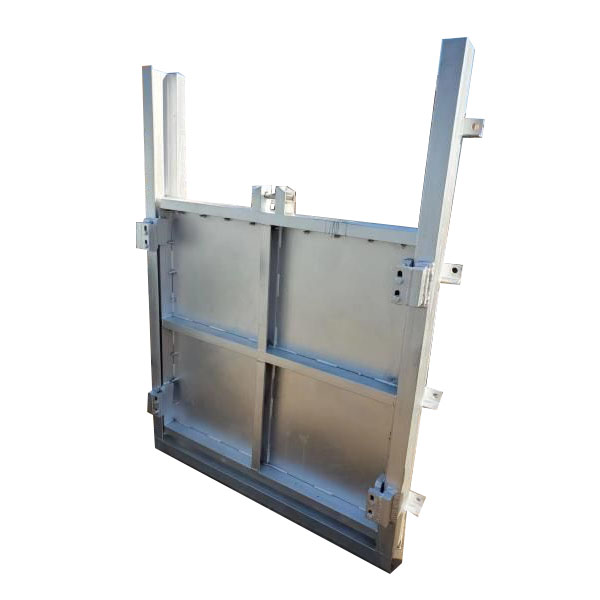
Detailed Product Parameters
To help you evaluate technical specifications, here are the standard parameters for a typical high-performance penstock gate:
| Parameter | Specification Range | Notes |
|---|---|---|
| Size Range | 500 mm to 6000 mm | Custom sizes available for specialized projects |
| Pressure Rating | Up to 25 bar | Designed for high-head applications |
| Material Grade | ASTM A516 Gr. 70, SS316, Duplex | Corrosion-resistant options for aggressive environments |
| Operating Temp | -20°C to 80°C | Suitable for most environmental conditions |
| Actuation Type | Manual, Electric, Hydraulic | Electric actuators include fail-safe mechanisms |
| Sealing Type | Rubber, Metal, or Combination | Zero-leakage guarantees under tested conditions |
| Coating/Protection | Epoxy, Zinc, or Hot-Dip Galv. | Enhanced corrosion protection for extended service life |
Why a Reliable Penstock Gate Matters
A well-designed penstock gate ensures operational safety, minimizes maintenance costs, and optimizes water management efficiency. For instance, in hydroelectric projects, a failure in the gate mechanism can lead to significant downtime and financial loss. Therefore, investing in a gate that matches your technical and environmental needs is crucial.
Additionally, consider suppliers who comply with international standards such as ISO 9001, ASTM, and IEC. Certifications ensure product reliability and performance under extreme conditions.
Final Thoughts
Choosing the right penstock gate requires a balance between technical requirements, operational conditions, and budgetary constraints. By focusing on material quality, actuation mechanisms, and sealing technology, you can enhance the durability and functionality of your water control system. Always consult with engineering experts and review case studies or project references before finalizing your decision.
If you are very interested in Tianjin FYL Technology's products or have any questions, please feel free to contact us!